Inside a Hearing Test: What Really Happens at Your Appointment
Ever scheduled a doctor’s appointment and immediately found yourself Googling what it’s going to be like? You’re definitely not alone. Most people like to know what to expect before walking into an appointment, especially when it involves something as personal as hearing. Think of this as your one-stop guide to understanding exactly what happens during a hearing exam and hearing aid conversation at 4 Bridges Audiology.
Scheduling Your Appointment: What’s First?
When you call to make an appointment, one of our patient care coordinators will ask a few starter questions. These help us understand your concerns and ensure you’re scheduled for the right type of visit. At 4 Bridges Audiology, we offer several appointment types, including:
- Hearing Evaluation
- Tinnitus Evaluation
- Auditory Processing Evaluation
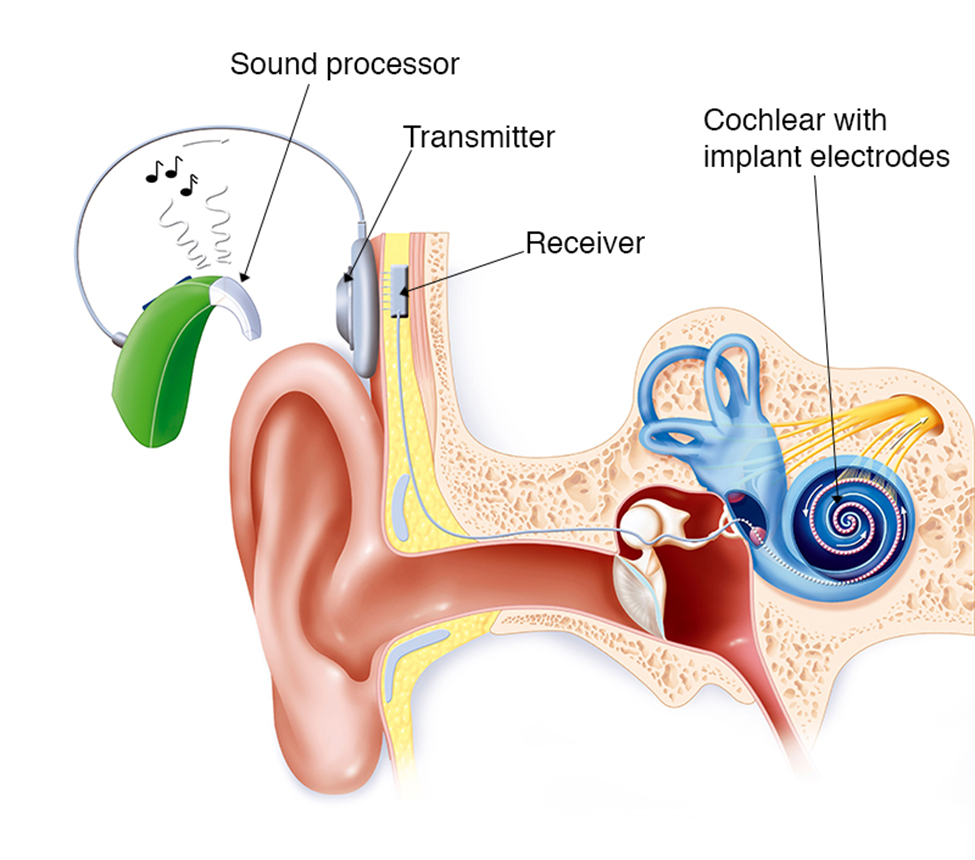
- Cochlear Implant Evaluation
At first glance, that might seem like a lot, but each appointment type simply helps your provider plan the right testing to give you the most accurate results. While every visit includes hearing testing, some appointments involve additional specialized tests based on your needs.
What Happens During a Standard Hearing Evaluation?
Let’s start with the most common visit: the standard hearing evaluation.
Once you’re in the sound booth, your provider will review a brief case history based on the paperwork you filled out beforehand. This helps guide the testing process and ensures we address your specific concerns from the start.
Step 1: Tympanometry
Testing often begins with a quick procedure called tympanometry. This test looks at how well your eardrum is moving and helps rule out middle ear issues such as fluid or pressure problems. It’s fast, painless, and gives your provider valuable insight before moving on.
Step 2: Pure Tone Hearing Testing
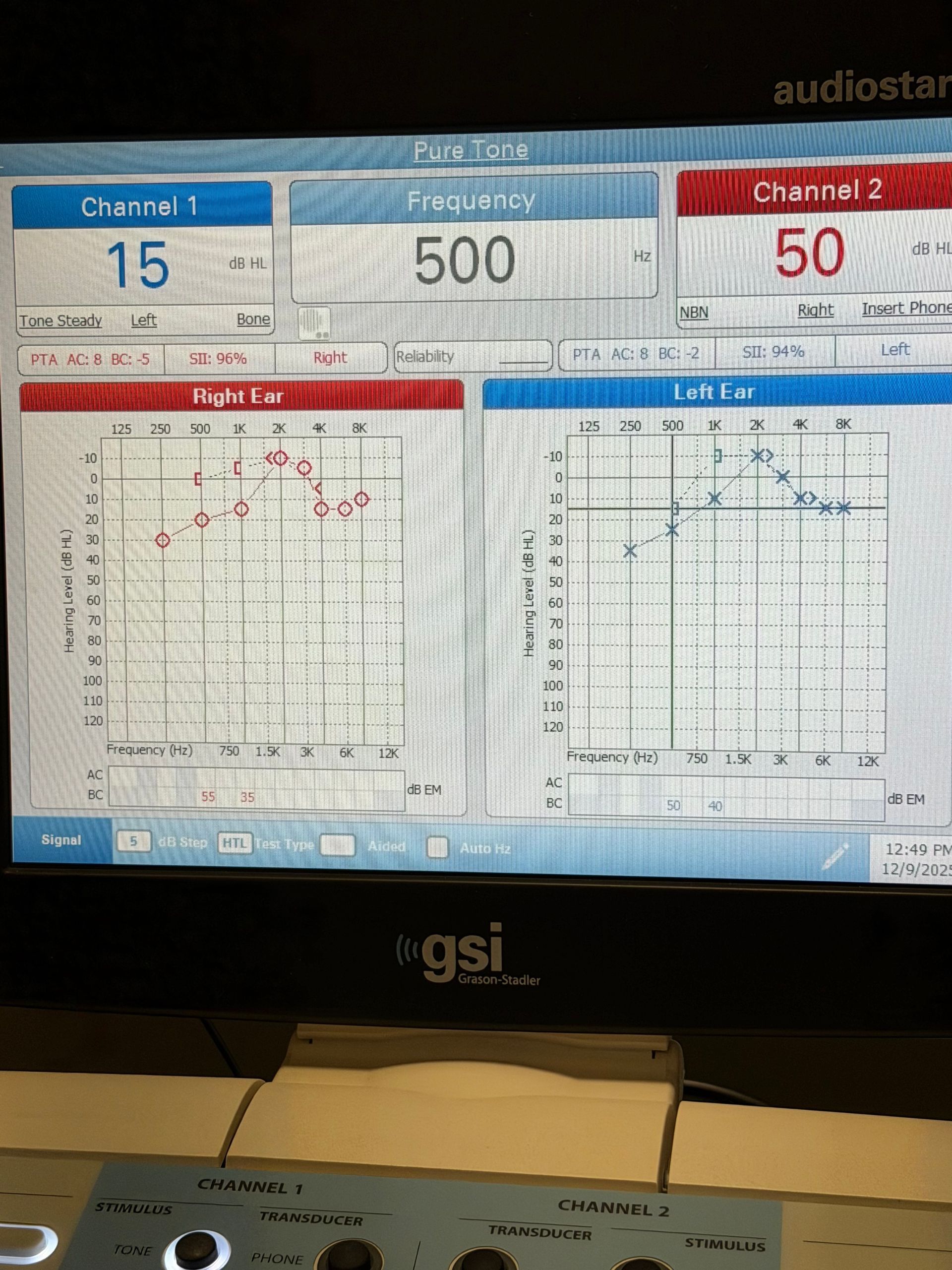
Next comes the part most people think of as the “classic” hearing test. You’ll wear soft foam inserts placed comfortably into your ear canals to allow for the most accurate results.
This testing includes:
- Air conduction testing (the beeps you hear through the inserts)
- Bone conduction testing (vibrations placed behind the ear)
- Recorded speech testing
- Sometimes, speech-in-noise testing
Pure tone testing helps determine both the type and degree of hearing loss. Using both air and bone conduction is essential. It allows the audiologist to determine whether hearing loss is caused by a middle ear issue or by changes in the inner ear. Without both tests, an accurate diagnosis simply isn’t possible, and hearing aids cannot be fit properly.
Understanding Speech Testing
Speech Reception Threshold (SRT)
This test finds the softest level at which you can correctly repeat words. It also serves as a “double check” to confirm that your pure tone results are accurate.
Word Recognition Score (WRS)
This test measures how well you can understand speech at a comfortable listening level. Results are given as a percentage for each ear and help your provider determine:
- How much benefit you may get from hearing aids
- Whether a cochlear implant evaluation might be appropriate
We use recorded speech materials because they are consistent and repeatable. Live voice testing (using the provider’s own voice) can vary and doesn’t allow for reliable progress tracking over time.
Optional Speech-in-Noise Testing
This test evaluates how well you understand speech in the presence of background noise, something many people struggle with the most. It may be used to:
- Screen for auditory processing difficulties
- Help determine which level of hearing aid technology may best support you
Because Medicare and some insurances don’t cover this test, it’s considered optional and is usually recommended only when your provider feels it will give meaningful insight into your real-world listening challenges.
What About the Other Evaluation Types?
All the specialized evaluations we mentioned earlier begin with the standard hearing test described above. From there, additional testing is added based on your needs:
Tinnitus Evaluation
You’ll complete extra tests such as:
- Pitch matching
- Effective masking level determination
These help identify the pitch and loudness of your tinnitus and determine what types of sounds can best help reduce its impact through hearing aids or sound therapy apps.
Auditory Processing Evaluation
This involves additional speech-based testing to identify where breakdowns occur in the brain’s processing of sound. With this information, your provider can recommend targeted therapies and strategies to improve daily communication.
Cochlear Implant Evaluation
This process involves specific candidacy criteria using standard testing, plus additional sentence and word understanding tests. If you qualify, your provider will refer you to an ENT physician to begin the surgical consultation process. We’ll dive deeper into this journey in a future post.
The Takeaway
Now that you know what to expect, a hearing test probably doesn’t sound quite as intimidating, right? Our goal at 4 Bridges Audiology is to make every step of the process clear, comfortable, and empowering. The more you understand your hearing, the better decisions you can make for your health and lifestyle.
If you found this guide helpful, be sure to explore our other blog posts where we dive deeper into hearing loss, tinnitus, hearing aids, and the latest in hearing technology. Your hearing journey doesn’t stop here; we’re just getting started.